Appearance
Size
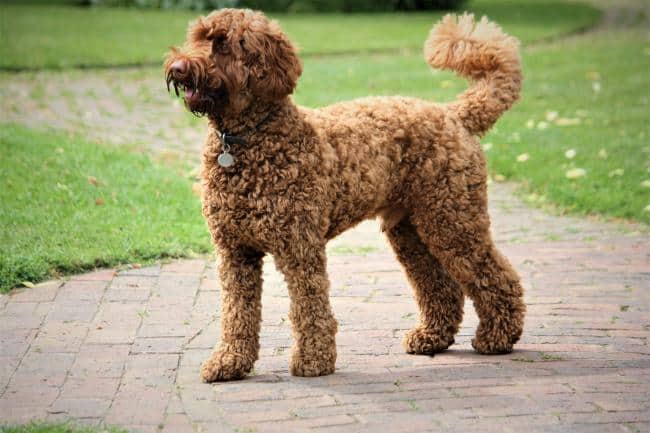
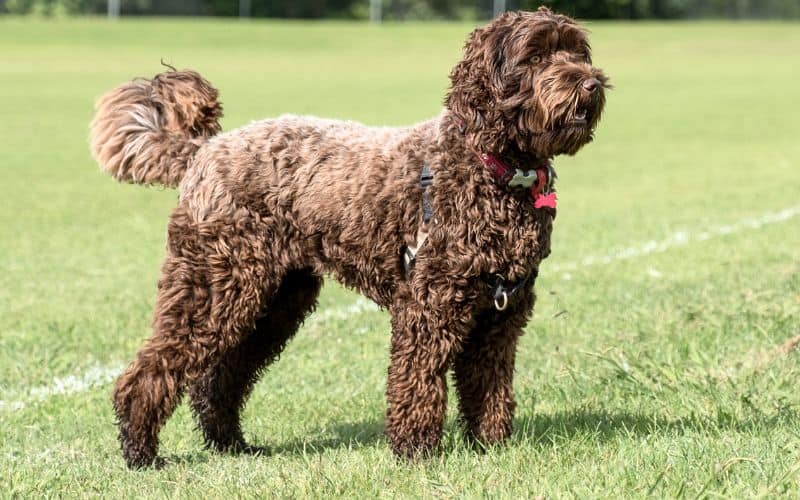
Mini Labradoodles fall within the medium to small range, with the F1 Mini Labradoodle being medium to small, the F1B Mini Labradoodle being small, and the F2 Mini Labradoodle being the smallest. On average, they weigh between 16 to 25 pounds and stand at a height ranging from 14 to 17 inches.
Coat Type and Colors
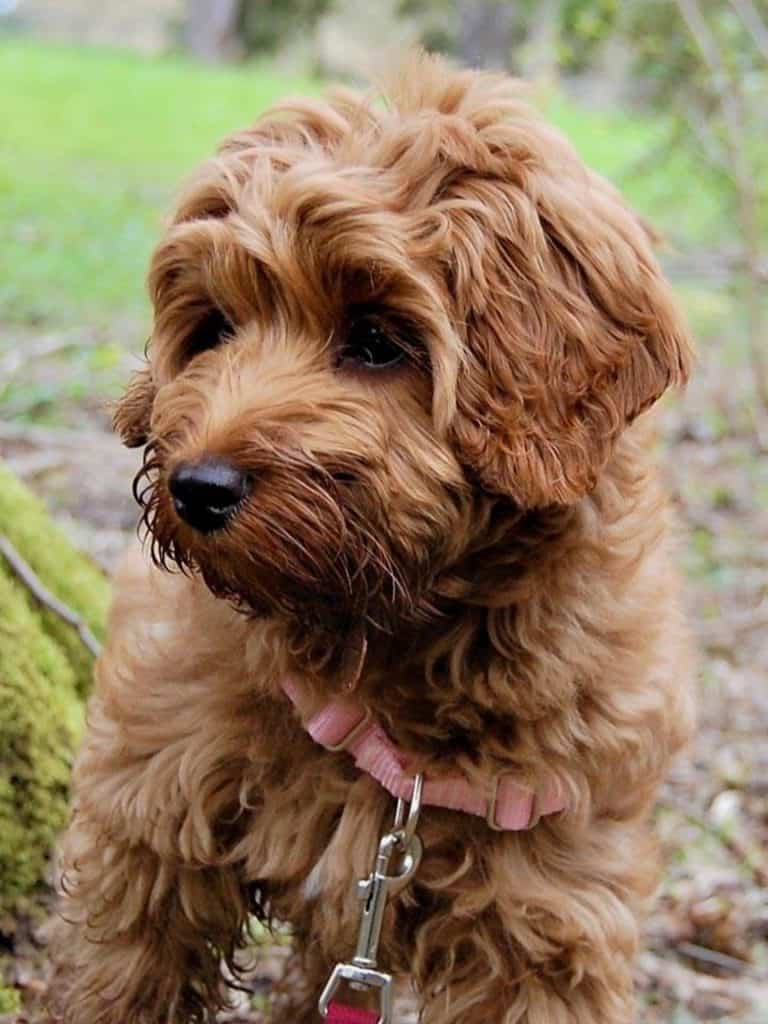
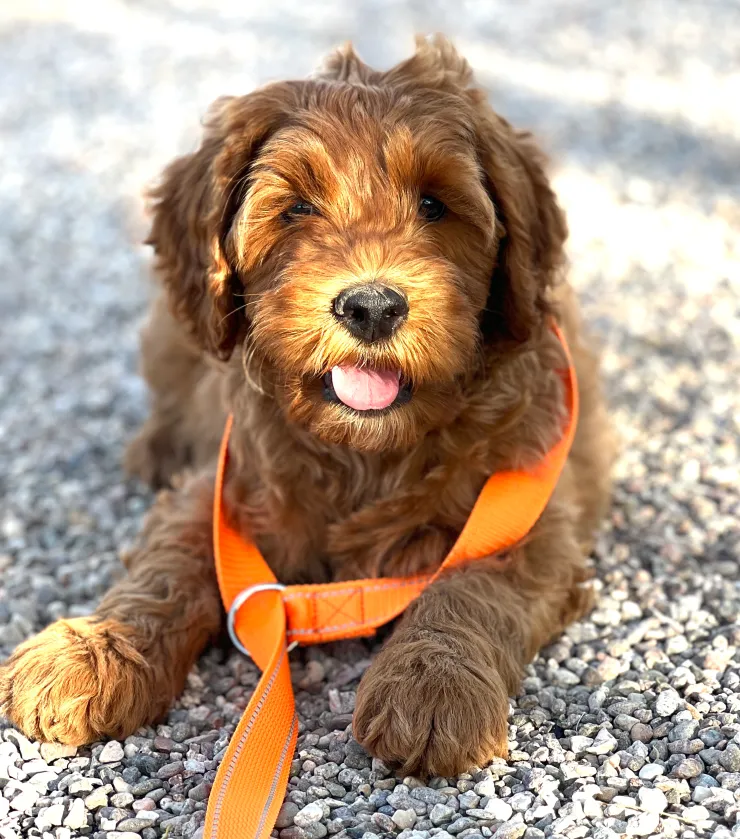
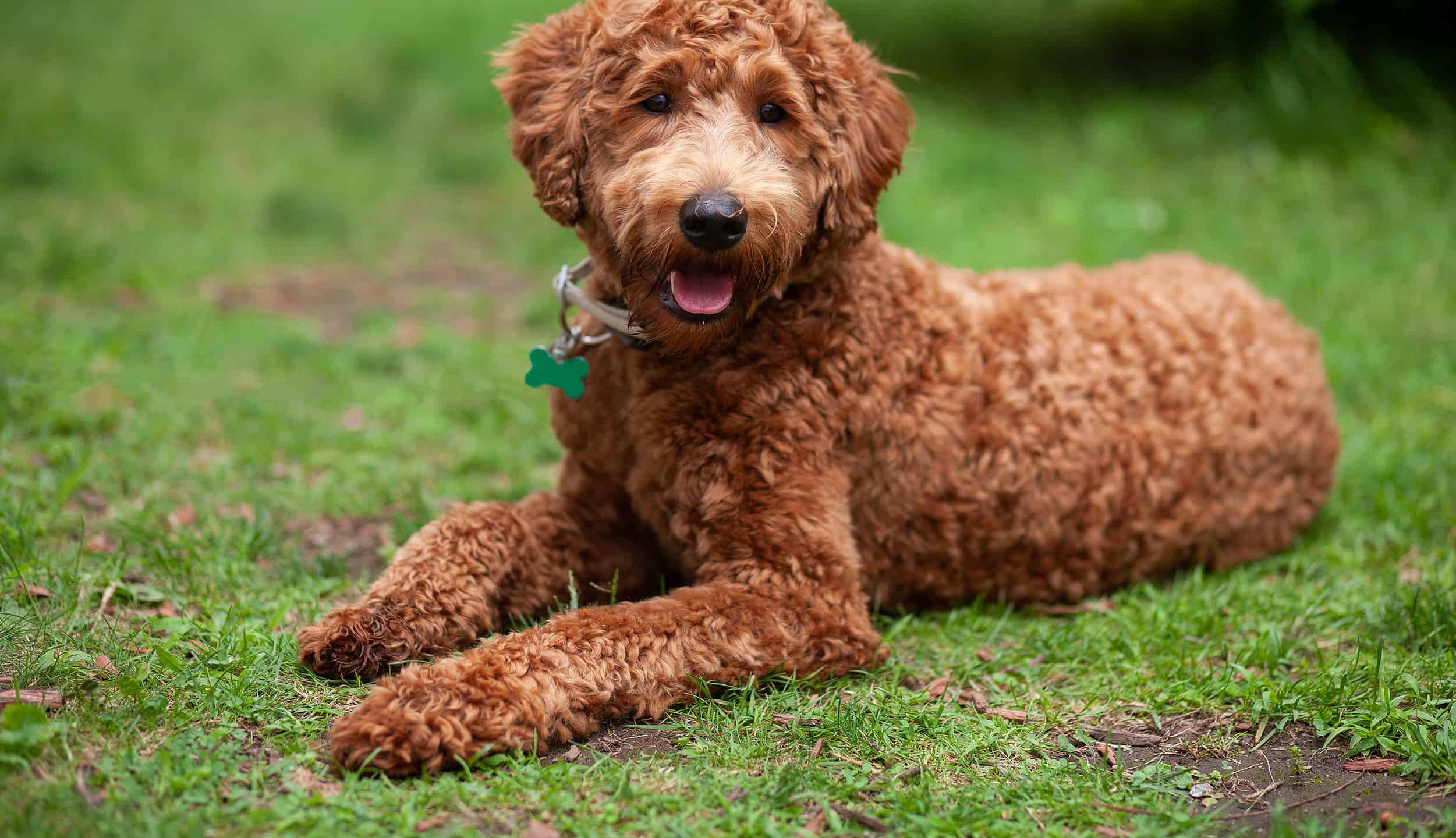
They have hypoallergenic coats that can range from straight to wavy or curly, and come in various colors, including white, black, brown, chocolate, cream, golden, silver, gray, red, apricot, or tan.
Distinctive Physical Characteristics
Mini Labradoodles have a compact, well-proportioned body, sparkling expressive eyes, adorable floppy ears, and a stunning hypoallergenic, low-shedding coat.
Temperament
Known for their high level of intuition and receptiveness, Mini Labradoodles excel as service dogs, guides, and therapy companions. They establish fast and friendly connections with everyone, including children, cats, other dogs, and strangers.
Compatibility with Families
Mini Labradoodles are well-behaved, gentle, and devoted, making them delightful companion pets suitable for families with or without children, singles, seniors, and those new to pet ownership. Their amiable nature and versatility make them a charming addition to a diverse range of households.
Good with Kids?
Mini Labradoodles are excellent with children of all ages.
Good with Other Pets?
They get along well with cats, both large and small dogs, and other household pets.
Social and Behavioral Tendencies
Mini Labradoodles are adaptable to various living situations and showcase flexibility in smaller sizes. They are curious, easygoing, and make excellent companions for adventures. Their comfort extends to both hot and cold climates, showcasing adaptability.
Social Needs
Mini Labradoodles are highly sociable and open to new people, environments, and other pets.
Tendency to Bark or Howl
They are not excessively vocal and often engage in restful activities when left alone.
Intelligence and Trainability
Mini Labradoodles stand out for their exceptional intelligence, swift learning, and adaptability in various training scenarios. Their eager-to-please personalities make them receptive to instruction and enthusiastic participants in training sessions.
Learning and Obedience
Mini Labradoodles quickly grasp tricks and master tasks in obedience training, showcasing their cognitive abilities.
Training Methods
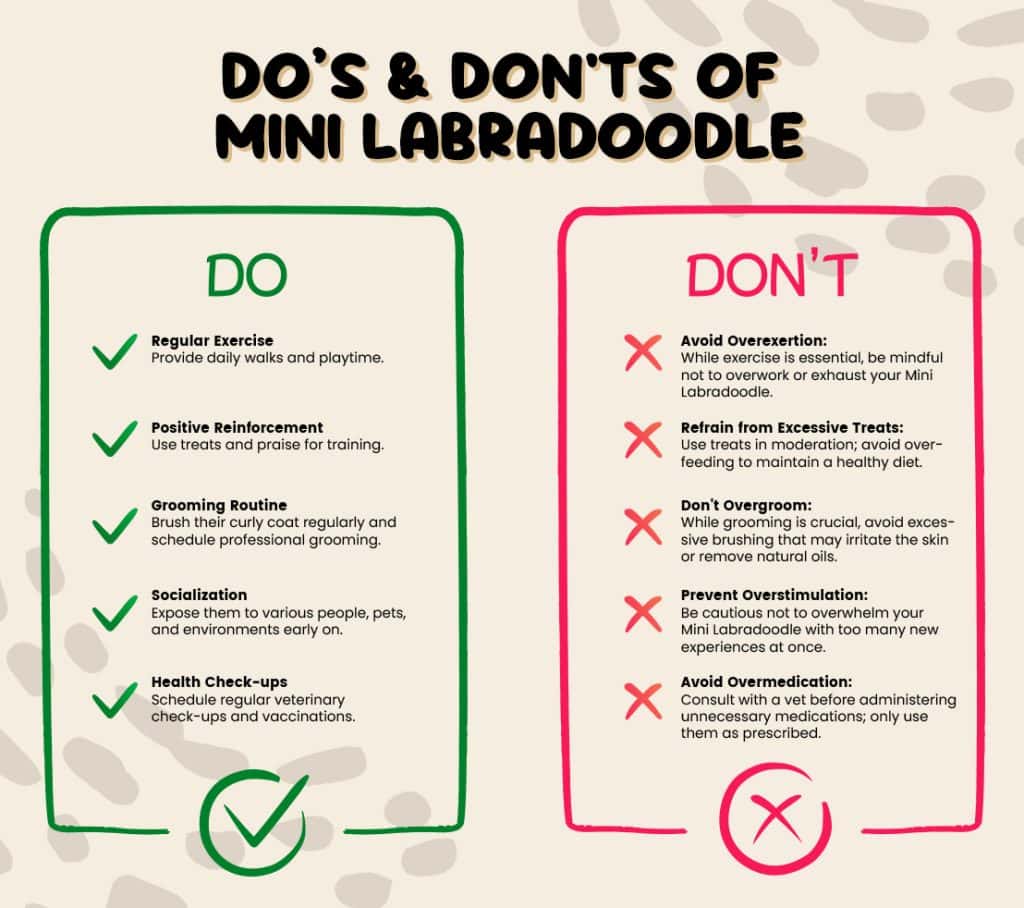
Treat-based motivation and positive reinforcement are highly effective in harnessing their natural inclination to learn.
Ease of Housebreaking
Their intelligence and adaptability contribute to ease in housebreaking.
Exercise Needs
Mini Labradoodles are spirited and thrive on staying active. They require an average of 60 minutes of daily exercise, encompassing both indoor and outdoor activities. Engaging their minds with games and puzzles further contributes to their overall mental and physical stimulation.
Daily Exercise Requirements
Regular walks, jogs, runs, swims, and hikes are among their favorite pursuits.
Suitable Activities
Canine games and sports, long walks, jogs, runs, swims, hikes, and mental stimulation activities.
Grooming Requirements
Maintaining the grooming needs of Mini Labradoodles involves a moderate but consistent routine. Daily brushing is crucial to prevent tangles and matting in their coats, ensuring they remain smooth and healthy.
Frequency of Grooming Needed
Daily brushing, occasional bathing, regular eye and ear checks, and nail trimming are part of their grooming routine.
Specific Grooming Tips and Techniques
Regular checks and cleaning of eyes and ears, trimming nails every few months, and scheduling professional dental checkups.
Shedding – How Much and When
Mini Labradoodles have low-shedding coats, making them suitable for individuals with allergies.
Diet and Nutrition
Mini Labradoodles require a balanced diet for overall health. Regular veterinary check-ups ensure their dietary needs are met.
Dietary Needs
A well-balanced and nutritious diet supports the health of Mini Labradoodles.
Recommended Feeding Schedule
Following an appropriate feeding schedule ensures their nutritional needs are met.
Special Dietary Considerations or Restrictions
No specific dietary restrictions, but a balanced and high-quality diet is essential.
Health and Care
Mini Labradoodles are generally robust, benefiting from hybrid vigor. Potential health issues may include hip and elbow dysplasia, cataracts, allergies, ear infections, and tooth decay.
Common Health Issues and Preventive Measures
Regular veterinary check-ups and preventive measures help address potential health issues.
Vaccination and Regular Health Checkups
Regular veterinary check-ups are crucial for Mini Labradoodles.
Lifespan
Mini Labradoodles typically have a lifespan ranging from 12 to 15 years.
Living Conditions
Mini Labradoodles are adaptable to various living conditions, including small city apartments or expansive countryside farms. They showcase flexibility in smaller sizes and adapt well to different climates.
Ideal Living Environment
Suitable for various living environments, including both urban and rural settings.
Adaptability to Weather Conditions
Adapt well to both hot and cold climates.
Breed-Specific Tips and Advice
Understanding specific tips and advice for Mini Labradoodles enhances their care and well-being.
Training Challenges and Tips
Consistent and positive training methods are effective.
Tips for First-Time Owners
Provide a loving and stimulating environment, and seek professional advice when needed.
Where to Buy/Adopt
Guidance on finding reputable breeders or rescues ensures the well-being of Mini Labradoodles.
Advice on Finding a Reputable Breeder or Rescue
Research and ask for referrals to find reputable sources.
What to Look for in a Breeder or Rescue
Check for proper breeding practices and the well-being of the dogs.
Questions to Ask When Buying or Adopting
Ask about health history, socialization, and breeding practices.